This week we want to discuss the Federal Reserve’s decision to raise interest rates and what it may mean for stocks.
On Wednesday, the Fed unanimously increased its benchmark interest rate by one quarter of a percentage point to 3.75%–4%. Inflation remains elevated, but the Fed also described an economy expanding at a solid pace, with resilient spending, strong productivity growth, and robust capital investment.
Higher interest rates generally create a headwind for stock valuations. Borrowing becomes more expensive and investors can earn more on competing investments such as bonds. As a result, investors may be willing to pay less for each dollar of corporate earnings.
But that does not mean a rate hike necessarily ends a rising stock market.
The historical chart below illustrates this distinction. Across seven tightening episodes since 1988, stocks tended to struggle around the initial increase as investors adjusted to the shift in monetary policy. Both the average and median paths subsequently recovered, leaving stocks higher twelve months after the first hike. Individual cycles varied, but the initial adjustment did not necessarily prevent further gains.
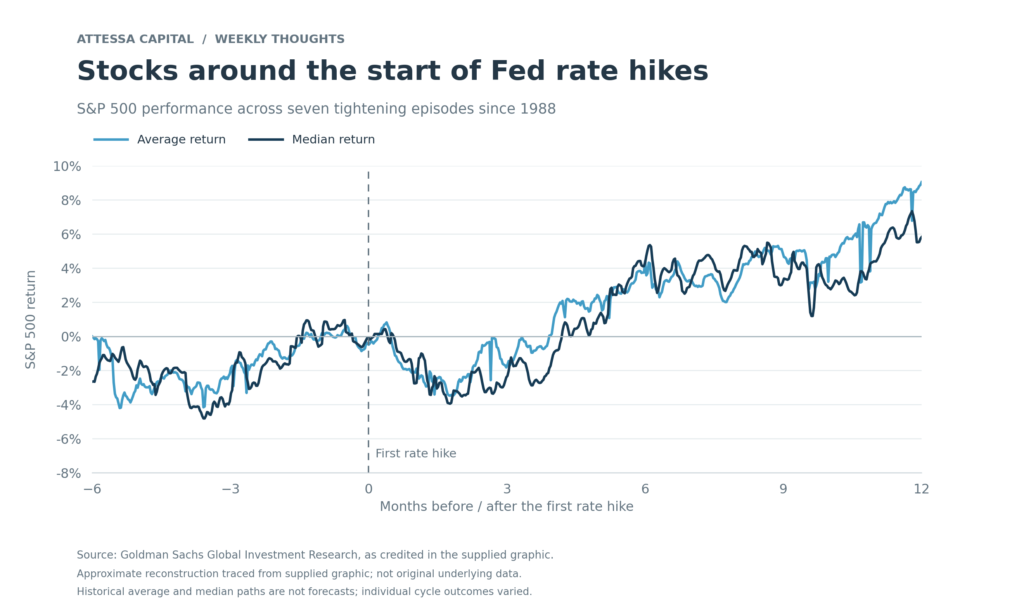
This time, some of that adjustment appears to have happened before the Fed acted.
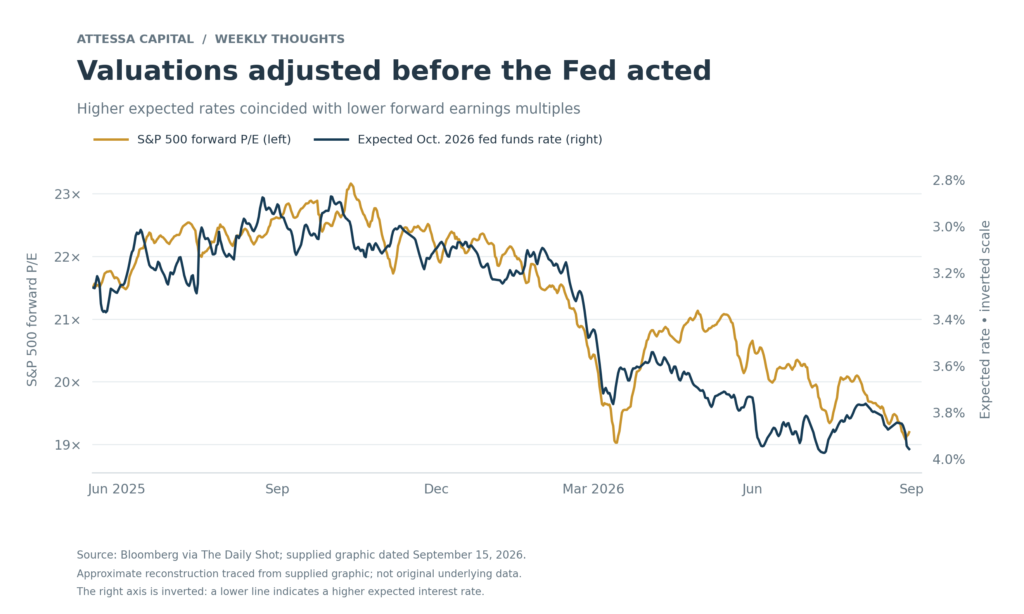
The next chart shows that as expectations for interest rates moved higher, the S&P 500’s forward price-to-earnings ratio declined. Investors have already reduced the price they are willing to pay for expected profits. That does not eliminate the risk from additional increases, but it suggests the market entered this week’s decision having already absorbed some of the valuation pressure.
Meanwhile, earnings expectations have continued to move higher.
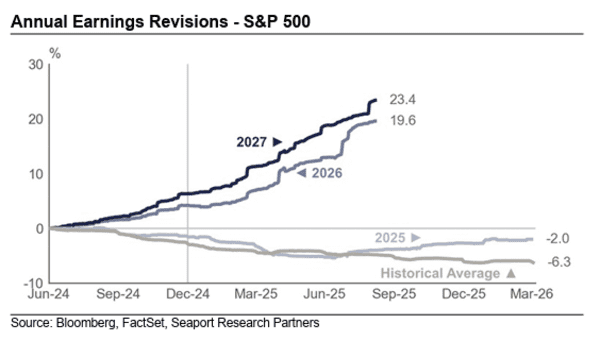
We think this combination matters. With valuations already lower and the earnings outlook still strong, stocks may have enough support to work through the shift in monetary policy and higher intermediate-term interest rates.
Of course, those earnings expectations still need to become actual profits. If earnings disappoint or rates rise substantially beyond current expectations, stocks could face renewed pressure.
For now, however, we see a reasonable case that continued earnings growth can help stocks absorb higher rates. There may be volatility along the way, but this week’s Fed decision alone does not mean the market’s advance has run its course.