August has opened with a bang, with stock markets selling off and fear reasserting itself in financial markets. Today we want to share some context for today’s sell off.
In technical analysis, there is this concept of “Overbought or Oversold”. Overbought refers to a situation in financial markets where the price has risen rapidly to a level that is seen as too high due to excessive buying pressure—oversold is the reverse.
This concept is measured by the Relative Strength Index (RSI). An index measurement above 70 signals overbought conditions and a reading below 30 suggests oversold markets.
The S&P 500 has had an RSI reading above 70 for the last month. So effectively the markets have been looking for reasons to correct this momentum. Today we got that correction. As of this writing the RSI has fallen from 76 on Monday to 47 today.
So what sparked this sharp drop? We would attribute today’s sell off to three reasons:
- July Payroll Report—lower than expected with a large downward revision.
- Tariff Deadline—new tariffs go into effect soon.
- August Vacations—August is vacation month on Wall Street and many traders are likely taking profits prior to decamping to the Hamptons.
July Payroll Report
The July Payroll Report rose by 73,000 jobs, below the estimate of 104,000. In addition to this miss, the prior two months were revised significantly lower, subtracting 258,000 jobs. The Unemployment rate jumped a tenth to 4.2%.
Two key factors are driving the weakness in employment—Federal Workforce Reduction and Foreign-Born Worker job losses.
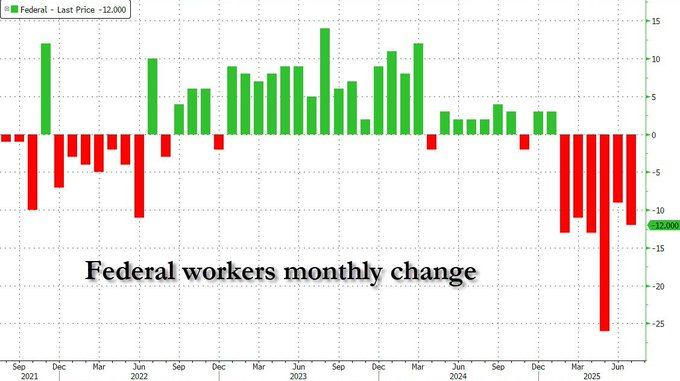
So far in 2025, the Federal Government has shed 280,000 positions or about 2% of the workforce.
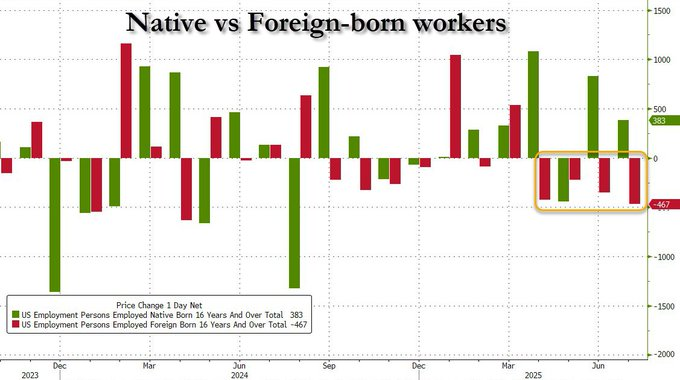
Since April, Foreign-Born workers have declined by 1.4 million with Native-Born workers up just shy of 400,000 over the same period.
So it makes sense that there would be pressure on the jobs report given these two factors.
Tariff Deadline
Usually the above mentioned job losses would have been absorbed by private industry, but given the uncertainty around tariff policy, companies have been reluctant to commit to new workers.
Without more clarity on tariffs, companies will continue to postpone hiring in spite of strong revenue and earnings growth.
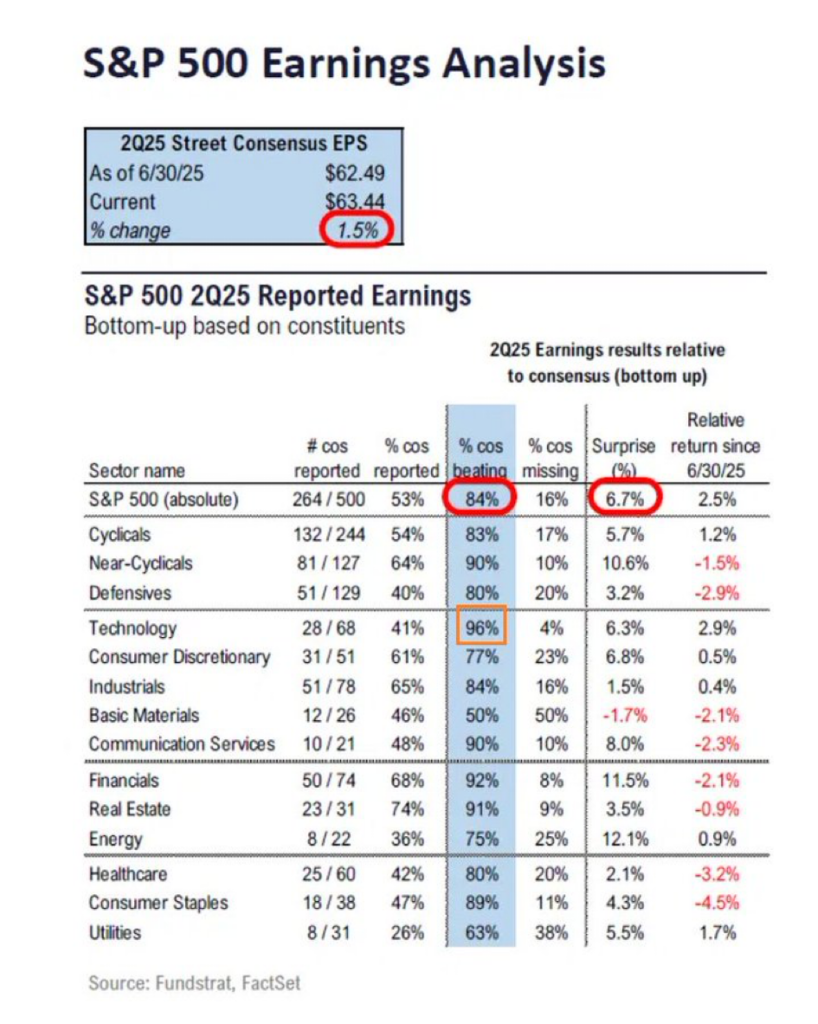
As you can see from the table above, corporate earnings have been very good in Q2 2025. So far, 84% of S&P 500 companies have beat expectations by an average of 6.7%.
Historically, in this type of growth environment, CEO’s would be looking for additional staff to support growth. Hopefully, this type of growth investment can resume once we get tariff certainty.
August Vacations
Most Wall Street traders have a mandatory two week vacation during August so that their books can be audited. This dynamic usually creates less liquidity in the markets and historically has led to a weaker return environment.
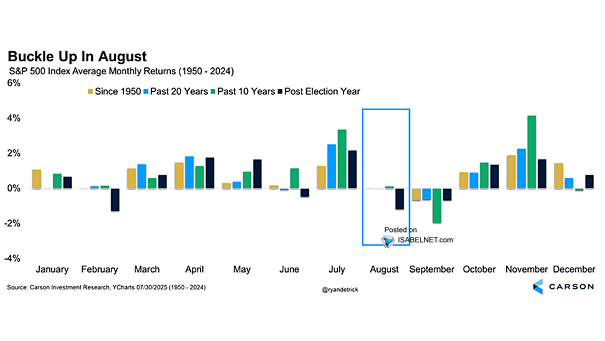
So given these dynamics, we aren’t surprised that August is starting off with a rough day. No reason to panic just yet.